A king-size bed with an elaborate upholstered headboard can look perfect in a furniture showroom, yet become an unexpected obstacle when delivery day arrives. The bedroom may have enough space, but the apartment entrance, elevator, or staircase might not accommodate the frame. In Manhattan, where historic buildings often feature narrow landings and compact elevators, this problem can turn a routine furniture delivery into a complicated operation.
When disassembly is impractical or the bed frame remains too large for the available interior route, moving it through a suitable window may offer an alternative. Professional hoisting services help residents evaluate this option, arrange appropriate lifting equipment, and coordinate the process with building management. The key is to establish whether the exterior route is safe and feasible before the furniture arrives.
Why Oversized Bed Frames Can Be Difficult to Move
Modern bed frames vary considerably in design. Some consist of separate rails and a detachable headboard, while others feature large upholstered panels, integrated storage, curved wooden structures, or elaborate decorative details. Even a frame that can be dismantled may contain components too wide or awkward to maneuver through a narrow stairwell.
The Problem With Tight Turns and Small Elevators
A piece of furniture does not need to exceed a doorway's width to become stuck. Its length, depth, shape, and the space required to rotate it can be equally important. Staircase railings and low ceilings may further limit maneuverability.
Before arranging a delivery, measure the bed frame's largest components and compare them with the entire route into the apartment. Check the entrance, hallway corners, elevator doors, elevator interior, and stairwell landings. Remember to account for door handles and other protrusions that reduce usable clearance.
If the frame consists of removable sections, ask whether professional disassembly would solve the problem. Hoisting should be considered when ordinary access is unsuitable, not simply because the furniture is large.
How Window Hoisting Works
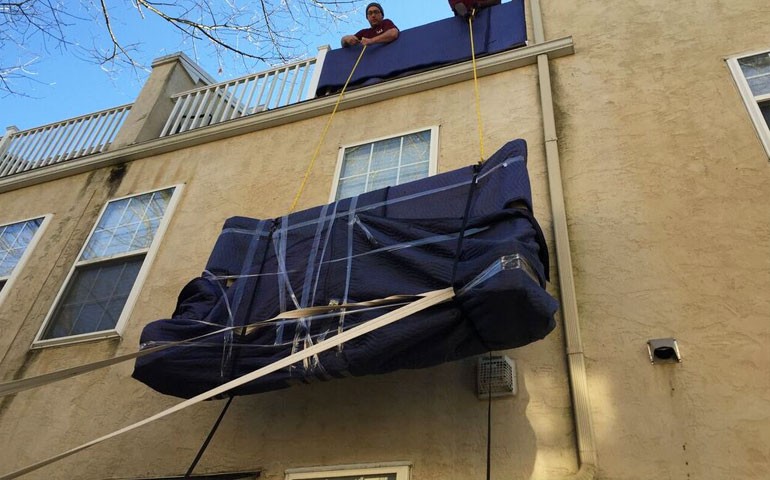
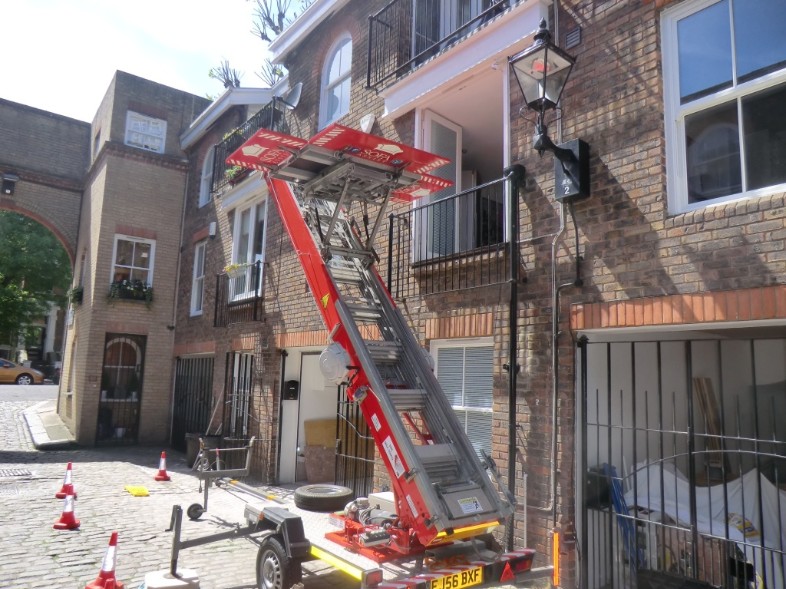
Furniture hoisting involves lifting an item along the exterior of a building and bringing it through an appropriate window, balcony opening, or another approved access point. Depending on the height, weight, and surrounding conditions, the operation may use a specialized furniture lift or other professionally selected lifting equipment.
The process begins with a site assessment. The team evaluates the bed frame's dimensions, the proposed window opening, the building exterior, and the available space at street level. The assessment also identifies obstacles such as scaffolding, overhead cables, awnings, and nearby structures.
Once a suitable method has been established, the frame is prepared with appropriate protective materials and secured for lifting. Trained operators coordinate the movement so the item remains stable as it travels upward and enters the building.
A furniture hoist NYC residents arrange for an oversized bed frame should be selected according to the specific property and item, rather than relying on a standard procedure for every building.
Checking Whether the Window Is Suitable
A window that looks large enough from inside the bedroom may not provide sufficient clearance for the actual furniture. The frame, sash, surrounding trim, and any balcony railing can reduce the usable opening.
Measure the Opening and the Furniture
Record the maximum dimensions of each component, including its length, width, depth, and any projecting decorative elements. Then measure the clear opening through which it would pass.
Consider the angle at which the item must enter. A long headboard may fit through a window when held in one orientation but become impossible to maneuver once it reaches the interior. Protective wrapping also adds to the overall dimensions.
Do not assume that a window sash can be removed or that an exterior fixture can be altered without permission. Building management should confirm what is allowed before any arrangements are made.
Assess the Exterior Setup Area
The ground-level space must accommodate the lifting equipment and provide a controlled working area. Manhattan sidewalks, parked vehicles, street trees, scaffolding, and overhead utilities can all affect the available setup space.
Depending on the location and lifting method, permits or additional building approvals may be required. These details should be addressed well before the scheduled delivery to avoid delays or a last-minute cancellation.
Preparing the Bed Frame for the Lift
Proper preparation protects both the furniture and the building. Remove mattresses, bedding, loose hardware, and detachable accessories before the frame is lifted. If the design allows safe disassembly, separate the components that can be transported more easily without compromising their structure.
Upholstered headboards may need breathable, nonabrasive protective coverings, while finished wood components require protection against scratches and impact. Glass inserts or decorative panels may need to be removed and packed separately when appropriate.
The lifting crew should identify suitable support points and avoid placing straps across delicate upholstery, weak joints, or decorative elements. The frame must be secured in a way that prevents excessive movement without crushing padding or distorting the structure.
If the bed has integrated electrical components, adjustable mechanisms, or storage features, explain these details when requesting the service. They may influence how the frame should be prepared and handled.
Coordinating Building Access and Scheduling
Window hoisting requires cooperation between the moving team and building management. Confirm permitted working hours, exterior access rules, insurance documentation, and any restrictions involving the facade or sidewalk.
In Manhattan residences, it is particularly important to coordinate with management before scheduling the delivery. A building may require advance notice or documentation even when the work takes place outside the apartment.
Maxi Moving is one option residents can contact when exploring specialized hoisting arrangements in New York City. When requesting an estimate, provide photographs of the bed frame, its dimensions, the apartment floor, and the proposed window opening. Mention any known restrictions or access concerns.
Understanding the Cost of Furniture Hoisting
The price depends on several factors, including the height of the apartment, the frame's weight and dimensions, the lifting equipment required, the accessibility of the setup area, and the size of the crew.
A straightforward lift from an accessible courtyard may involve fewer complications than an operation above a busy Manhattan street. Additional costs may arise if special permits, extra equipment, furniture preparation, or extended setup time are necessary.
Ask for a written estimate that explains which services are included. Confirm whether the quote covers preparation, protective materials, lifting, placement inside the apartment, and any required access arrangements. It is also sensible to ask how weather-related postponements or unexpected site restrictions will be handled.
What Happens After the Bed Frame Reaches the Apartment?
Before the lift begins, clear the bedroom and the area around the receiving window. Protect the floor, remove nearby objects, and make sure the crew can place the frame without navigating additional obstacles.
Once the furniture is inside, inspect it for visible damage and confirm that all detachable components and hardware are accounted for. Reassemble the frame according to the manufacturer's instructions, ensuring that its joints and fasteners are secure before placing the mattress on it.
Avoid attempting an improvised exterior lift with ropes or unverified anchor points. Oversized furniture can swing unexpectedly, and an uncontrolled load presents serious risks to people, property, and the item itself.
Making an Oversized Furniture Delivery Possible
A narrow staircase or small elevator does not automatically mean a large bed frame cannot enter a Manhattan apartment. Accurate measurements, an assessment of the exterior route, suitable equipment, and advance coordination can reveal whether window hoisting is a practical option.
By addressing access problems before delivery day, residents can avoid unnecessary handling, protect their furniture, and reduce the risk of damage to shared building spaces. The result is a more controlled installation process—and a bed frame that reaches its intended bedroom without being forced through a route that was never designed to accommodate it.