A sporting event has traditionally needed a real venue, competitors, officials and a place on a calendar. Digital technology has gradually removed some of those limitations, first by making live sports accessible through online platforms and later by introducing virtual competitions. Artificial intelligence is now pushing that transformation further by allowing sporting events to be generated, adapted and presented through software.
This shift is central to the development of AI-Sports as a new digital content category. B1 works on technology products that combine artificial intelligence with sports entertainment and managed sports infrastructure for international iGaming operators. Its AI sports offering illustrates how generated competitions can become part of a broader digital sports environment, with more information available at https://b1.global/ai-sports
A Different Way to Create Sporting Events
Traditional sports production begins with an event that already exists. A league announces a fixture, teams prepare, and technology is then used to distribute information about what happens on the field or court.
AI-generated sports can reverse that process.
Instead of waiting for an external event to take place, software can construct a competition according to predefined rules, behavioral models and dynamic conditions. The result is a sporting event created within a digital environment rather than reproduced from a real-world fixture.
The Event Becomes a Software Process
An AI sports event can consist of multiple interconnected components: competitors, rules, game states, event sequences, visual presentation and statistical information.
Artificial intelligence can influence how these components interact, allowing a competition to evolve rather than simply following a fixed animation sequence.
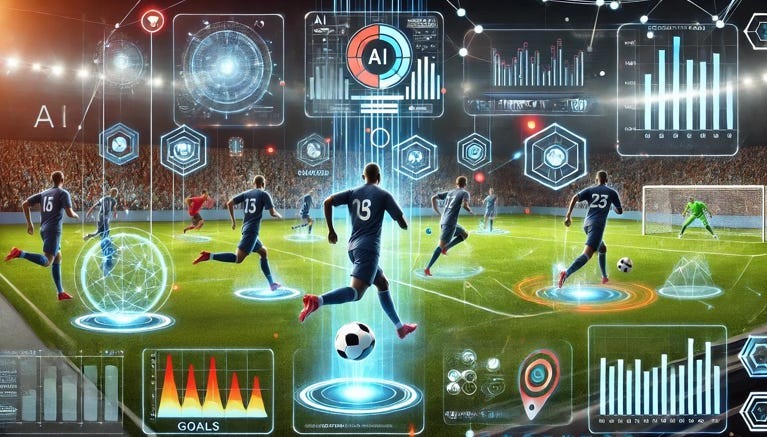
This distinction matters because a generated match can potentially produce different scenarios every time it runs.
Why AI Changes Sports Content Production
Conventional sports content is constrained by availability. If no match is scheduled, there is no new live sporting event to distribute.
AI introduces a different production model.
Digital competitions can potentially be generated independently of the physical sports calendar. This creates opportunities for platforms that want to offer sporting content during periods when real-world events are unavailable.
Continuous Availability
One of the most important implications is the possibility of creating sports content on demand.
A digital platform does not necessarily need to wait for a particular tournament or league fixture. Generated competitions can provide an additional content layer that operates alongside conventional sports coverage.
This does not require AI sports to replace traditional competitions. Instead, it can complement them by expanding the range of available digital experiences.
Adaptive Gameplay Instead of Fixed Scripts
Virtual sports have existed for years, but artificial intelligence can introduce another level of flexibility.
A fixed script determines exactly what happens. A more adaptive system can respond to the current state of a competition.
If one competitor establishes an advantage, the following sequence can be generated within a different context. If the score becomes close, the system can produce another type of scenario.
Context Shapes What Happens Next
This is one of the most important principles behind AI-Sports technology.
An event can be influenced by previous events. The current score, stage of a competition and recent sequence of actions can all contribute to the next simulated situation.
Such relationships create a more dynamic structure than simply selecting unrelated outcomes.
Intelligent Competitors and Digital Sports
Another area of development is the use of intelligent digital competitors.
Instead of treating participants as visual objects that follow predetermined actions, AI can give them behavioral models that influence how they perform within the simulation.
Different profiles can lead to different styles of competition.
Creating Distinct Digital Personalities
A simulated competitor can be associated with specific tendencies, strengths or tactical preferences.
One may be represented through a more aggressive approach, while another may behave more conservatively. These characteristics can influence event sequences without necessarily determining the final result in advance.
This gives AI-generated sports a broader range of possible match structures.
Building Variation at Scale
Creating one convincing digital competition is only part of the technical challenge. An operator may require a continuous stream of events.
At that point, variation becomes essential.
If the same structures repeatedly appear, users may notice the patterns. AI can help generate combinations of situations that create a wider range of outcomes.
Controlled Diversity
The objective is not unlimited randomness.
A useful AI sports system needs to operate within the rules and statistical logic of the sport. Events should remain coherent while allowing different paths through the competition.
This balance between structure and variation is what makes artificial intelligence particularly relevant to digital sports production.
The Infrastructure Behind AI-Generated Events
The visible match is only one part of an AI sports product.
Every generated event also produces information that needs to be processed and delivered. Scores, states, results and other data may need to reach operator interfaces in real time.
This creates a relationship between AI content generation and sports data infrastructure.
Content and Data Need to Work Together
B1's broader product portfolio reflects this relationship by combining AI-driven sports experiences with managed sports data capabilities.
For an operator, the value is not limited to watching a generated competition. The event also needs to exist as structured digital information that can move through the relevant technology environment.
This requires reliable APIs, data processing and integration mechanisms alongside the AI engine itself.
How AI-Sports Can Fit Into Operator Platforms
A generated sporting event becomes commercially useful when it can operate inside the systems already used by an operator.
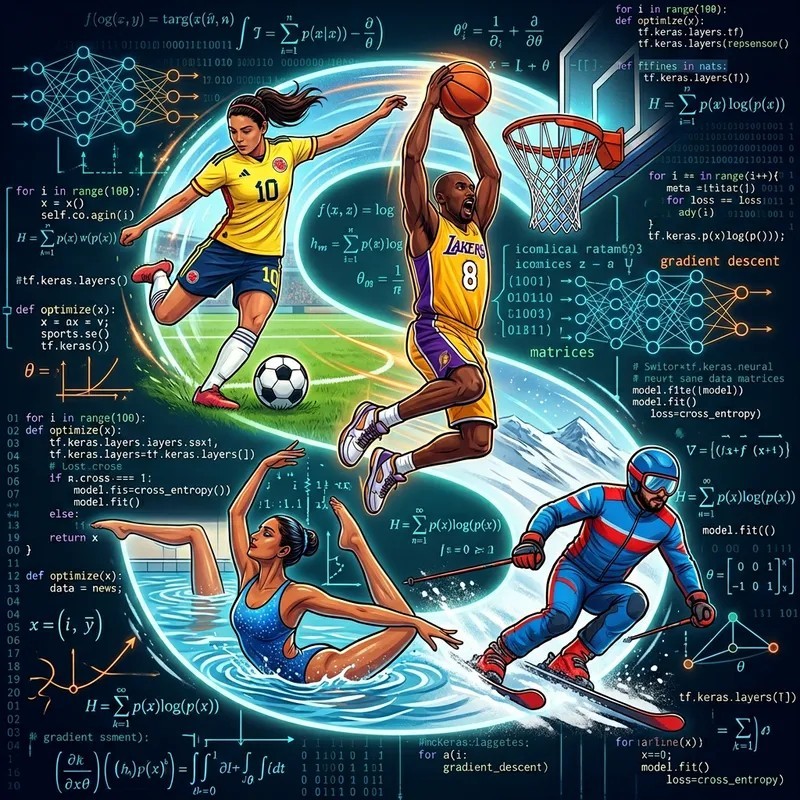
Integration therefore becomes an important part of product design.
A flexible AI sports solution can potentially support different interfaces, presentation formats and operator environments without requiring every customer to build a completely separate technology layer.
From AI Engine to Complete Product
The difference between an experimental simulation and a commercial sports product is substantial.
The latter requires content generation, data delivery, presentation, monitoring and integration to work together.
A product-focused approach can treat these elements as parts of one experience rather than independent technical projects.
New Opportunities Beyond the Traditional Sports Calendar
The ability to create digital sporting events independently of physical fixtures can change how operators think about content planning.
Instead of organizing the entire sports offering around external schedules, businesses can introduce an additional layer of continuously available competitions.
This can be particularly relevant across different geographical markets and time zones, where demand does not always coincide with the local schedule of major sporting events.
Designing Content for Different Operating Windows
AI-generated sports can provide greater flexibility around when digital competitions are available.
A platform may use generated events during quieter periods, between major fixtures or at times when particular sports have limited live coverage.
The technology therefore becomes not just a simulation tool but a potential content-production mechanism.
The Next Stage of Digital Sports Creation
AI-Sports represents a broader change in how sporting events can be conceived. Instead of beginning with a real-world fixture and moving it into a digital environment, developers can build the event itself through intelligent software.
Competitors can be modeled, game states can evolve, events can be generated dynamically and the resulting information can be delivered through modern sports infrastructure.
As these technologies mature, digital sporting events are likely to become increasingly configurable and adaptive. For iGaming operators, this creates opportunities to supplement traditional sports calendars with new forms of continuously generated entertainment, while for technology providers such as B1, it opens a wider field for building products around artificial intelligence, sports data and digital competition design.